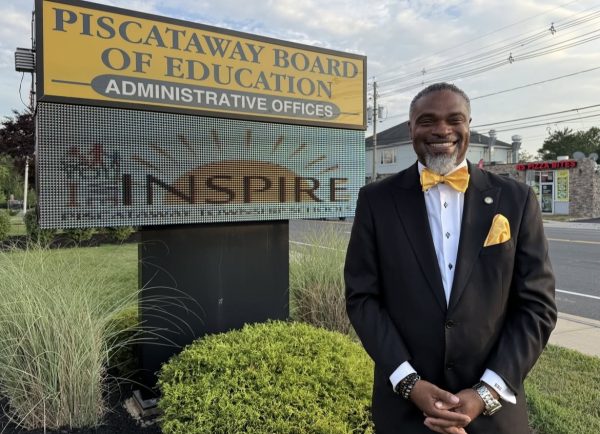
Student journalists collected questions from Piscataway High School students and interviewed the new superintendent, Erskine R. Glover, about key issues including the upcoming phone policy, academic opportunities, student programs, and how the district plans to respond to student ideas. After gathering questions from students, Chieftain co-editor-in-chief Haniya Arif and sports editor Jagger Tinitigan sat down with Glover to discuss those concerns and bring student perspectives into the conversation.

In a comprehensive conversation, Glover discussed topics ranging from dual enrollment and engineering programs to esports and student internships. Throughout the interview, one message remained consistent: student voices matter.
“If you tell me something isn’t working, I’m going to listen,” Glover said. “It doesn’t necessarily mean I’ll agree 100%, but I’m going to listen.”
He also emphasized that academic success should not be measured only by grades or test scores, but by whether students feel supported and prepared for the future.
“For some students, academic excellence might mean being on the honor roll every marking period,” he said. “For others, it may not be the same thing, but they still want to be successful.”
Rather than defining achievement in one narrow way, Glover said he hopes students graduate feeling that high school gave them a meaningful and well rounded experience.
“If students walk away feeling like this was a good experience and they’re ready for post-secondary life, I think that’s how we can measure our success,” he said.
Phone policy expected next year
One of the biggest topics students raised was the district’s expected phone ban beginning next year.
According to Glover, the change is tied to a statewide requirement and will need to be implemented across the district.
“This is a state of New Jersey law that districts have to enact,” Glover said. “Outside of medical reasons or certain instructional needs, there shouldn’t be a reason that students are using their cell phone during the course of the school day.”
Still, he said his goal is not to create an overly harsh system, but to encourage students to manage their own phone use.
“My goal is for students to self regulate and put their phones away without having to have them taken,” he said.
He explained that consequences would likely be tiered rather than immediately punitive, and that the district is still considering how the policy will work in practice.
Looking beyond test scores
Students also asked how he plans to evaluate whether Piscataway is succeeding academically.
Glover said that while test scores and performance data matter, they are only one part of the picture.
“I do look at test scores,” he said. “In this state of New Jersey, we get measured by performance, student performance.”
At the same time, he said the district uses that data to better understand how students progress through the system and where additional support may be needed.
“It’s just one indicator,” he explained, pointing to the importance of looking at long-term student growth.
Dual enrollment and college readiness
One of the clearest academic priorities Glover discussed was dual enrollment.
“I’m a believer in AP, but I’m also a bigger believer in dual enrollment courses,” he said.
Unlike AP classes, which require students to pass an exam for possible credit, dual enrollment allows students to earn college credit directly through the course.
“Dual enrollment is actual college credit,” Glover said. “That’s saving your parents money.”
He noted that students who plan early could graduate high school with a significant number of college credits already completed.
Addressing concerns about the Patton building
Students also brought up concerns about the condition of the Patton building, including visible damage such as the hole in the ceiling that some students have noticed.
Glover acknowledged the concern and said the district is aware of the issue.
According to Glover, repairs to the building are expected to be addressed over the summer, when maintenance work can take place without interrupting the school year. He said the district does recognize that the condition of school facilities affects students’ day-to-day experience.
Engineering, robotics, and expanding pathways
Students also raised concerns that engineering and robotics opportunities at PHS do not feel as developed or visible as pathways in areas like medicine or business.
Glover said he wants to review the programs currently offered and explore ways they might be expanded.
“We can always add more,” he said. “The challenge is, do we have the teachers? Do we have the right agreement with outside agencies? But adding an engineering course, if we need to, is doable.”
He encouraged students interested in STEM to continue voicing their ideas and interest.
More than gaming: the purpose of esports
Students also asked about the district’s new esports room, which some have questioned.
Glover said esports should not be seen simply as gaming, but as part of a rapidly growing industry with real career opportunities.
“Esports is one of the fastest growing industries,” he said, describing it as a “multi-billion dollar industry.”
Beyond competition, he explained that esports connects to fields such as marketing, content creation, broadcasting, and engineering.
“It’s not just about playing games,” Glover said. “There’s marketing, advertising, content creation, and engineering connected to it.”
Turning student interests into internships
The second half of the interview focused heavily on internships and mentorship opportunities for students.
Glover said he hopes the district can create internship experiences that allow students to explore careers while still in high school.
“That’s what school is supposed to be about,” he said. “That’s more than an A to me. That’s bigger than an A on a test.”
He described a vision where students could work alongside district professionals in areas such as communications, writing, technology, and business.
“I want to create internships,” Glover said. “There is a role for every career that you think about. The school district could do an internship.”
Career advice: build from passion
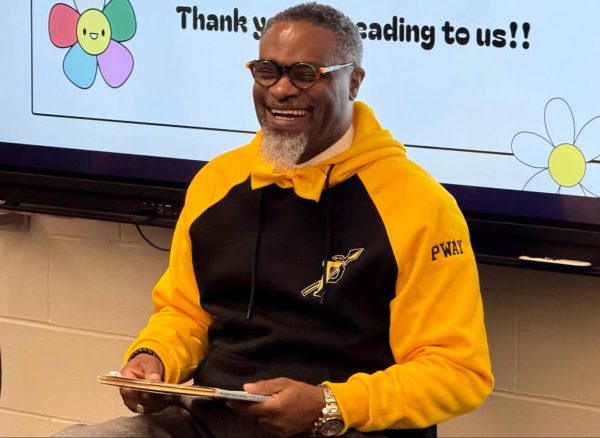
When asked what advice he would give students who are unsure about their future careers, Glover encouraged them to start with their interests.
“Figure out what you enjoy and make it your career,” he said. “Don’t do something because your parents said do it.”
He encouraged students to explore hobbies and passions and think creatively about how those interests could turn into careers.
Student ideas, from fencing to finance
The interview also opened the door to several student ideas, including the possibility of a fencing club, archery programs, stock market education, and expanded business opportunities.
Rather than shutting those ideas down, Glover said he wants students to continue sharing them.
“Why squash your dream before we even get the chance to see if it can really work?” he said.
As Piscataway students adjusted to a new superintendent, the conversation offered an early look at how Glover hopes to approach leadership in the district, by listening to student concerns and exploring ways to turn student ideas into real opportunities.