How Do AI DataCenters Affect Electricity Costs?
In an already struggling economy, New Jersey residents were met with skyrocketing electric bill prices of a nearly 20% increase in June of 2025. Even more frustratingly, many residents who claim they’ve used less electricity than in previous months have experienced the sharp rises as well. As frustration increases, there is one question that gets constantly asked: why is this happening?

With the recent rise of Artificial Intelligence (AI) and abundance of data centers, many people have begun to notice the relationship between them and the increasing electricity prices. As a result, the public has grown more and more opposed to new construction dedicated to AI. And while there is a correlation, the relationship is far more complicated than just that.
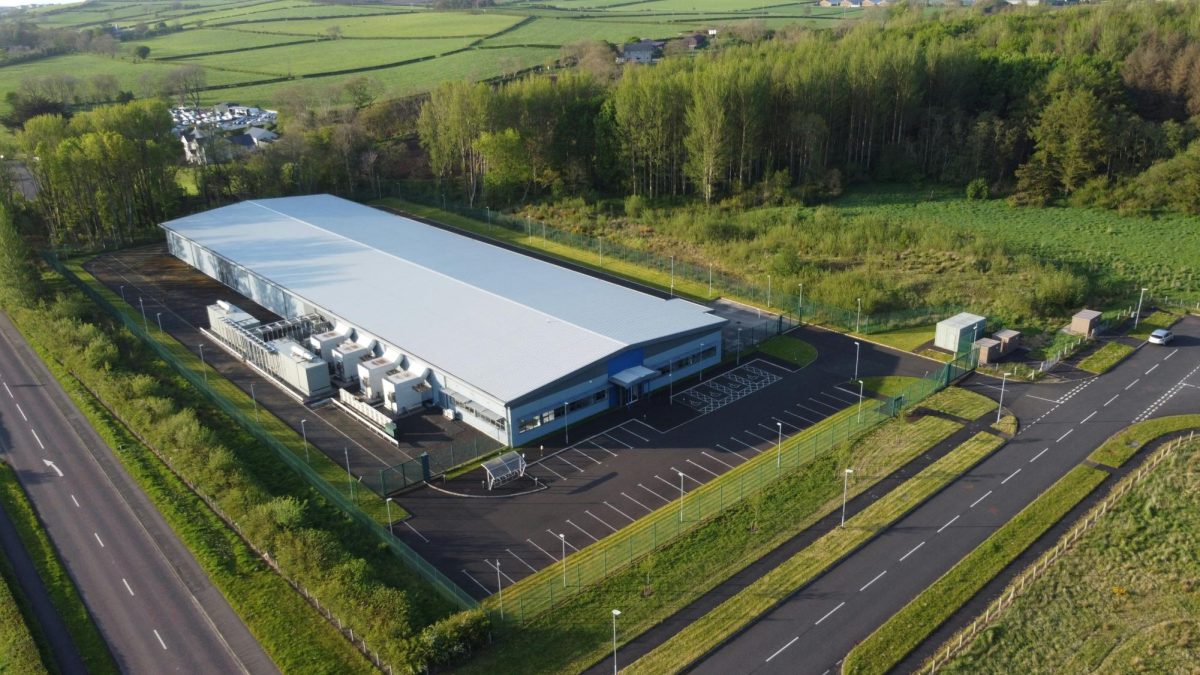
Artificial intelligence is the ability for computer systems to perform tasks for the convenience of humans. AI data centers, specifically, require much more energy than a typical data center.
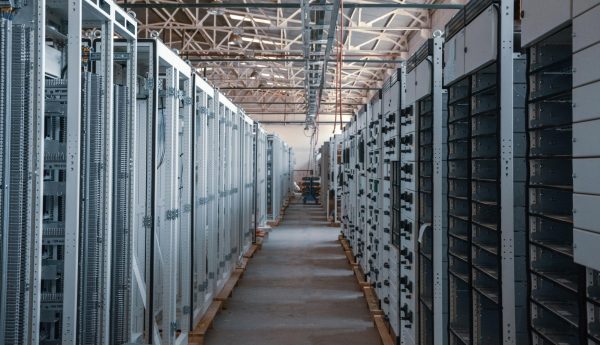
For AI to execute these complex tasks, they rely on data centers that provide the power and energy necessary to operate.
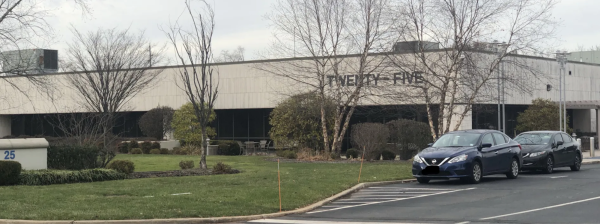
New Brunswick/Rutgers residents recently unanimously voted to cancel a proposed 27,000 square-foot-AI data center five minutes away from Rutgers College Avenue campus and ten minutes away from Piscataway. However, unbeknownst to many residents of Piscataway, New Brunswick, and Rutgers, there are already at least two AI data centers in Piscataway. Piscataway already houses QTS, one of the largest data centers in the state (~360,000 square feet).
To find out more about this issue, I interviewed Dr. Kiran Garimella — a Rutgers professor conducting a study on the correlation of electricity costs and AI data centers. He argues that it is much more nuanced than simply saying that data centers directly contribute to high prices: “You hear the same kind of narrative in the media and popular press, but to actually quantify that and point out that this is because of the data center is really not a trivial problem. That’s because in general electricity prices over the last 20 years are increasing constantly every year, but there could be other factors irrespective of the data centers.”
Electricity markets don’t behave like typical supply-and-demand markets. According to a recent study, unlike typical markets (Higher demand -> higher prices), states with great electricity demands often saw lower prices. For example, North Dakota, which is also experiencing a great energy demand due to growing construction of AI data centers, saw a general decline in electricity prices (8 cents/kWh). Additionally, Connecticut, which has only recently emerged as a market for AI data centers, experienced higher electricity prices (24.5 cents/kWh) than New Jersey (16.4 cents/kWh), an already established hub for AI data centers. So if it is not energy demand that drives these prices, what does drive these prices?
Electricity prices rely heavily on how expensive the electricity is to produce. In North Dakota, where electricity prices are among the lowest nationally, the state is one of the only states with a multi-resource energy policy, being one of the top wind and solar energy producers (renewable energies account for 40% of production). So when demand rises, wind and solar generation meet that demand, keeping prices low.
Wind power in North Dakota has a very low operating cost because land is abundant and wind speeds are high. In contrast, New Jersey is forced to rely on older grid systems and imported power because of how dense the population is (and as a result, less land). This makes it harder and more expensive to support the rapid expansion of AI data centers without major infrastructure upgrades, and this is where the majority of our electricity costs come from.
But the answer isn’t to simply change primary energy sources to clean energy. Not only is it expensive, but as Dr. Garimella notes, “Clean energy which is cyclical cannot be used for data centers because they need constant and consistent power.” Instead, drastic changes to infrastructure grids and energy efficiency is required to support the power demand and water cooling.
AI data centers require massive electrical power and advanced liquid cooling. They can’t use 20th century infrastructure because these sites lack the necessary power grid capacity and cooling efficiency. With the rapid expansion of AI data centers, these major upgrades can’t be implemented quickly, especially with New Jersey’s outdated infrastructure, which received a D+ rating from the American Society of Civil Engineers. Because of New Jersey’s proximity to New York and lower utility rate and tax incentives, the benefits of maintaining the status quo have outweighed the challenges of aging infrastructure. When power infrastructure must be upgraded to meet the needs of these data centers, Big Tech companies distribute these costs across their customer base, meaning even if a resident uses less electricity, they may still receive a pricey electricity bill not of their own fault, but of corporations. In summary, it is not the Big Tech companies that have to pay for these modern changes — but instead, the consumers. The large, numerous data centers located in Piscataway have likely already passed along these charges to locals, hence the large spikes many residents have experienced in their electricity costs.
It is speculated part of the costs have been placed onto New Jersey residents. But a large issue is that much of these spikes in prices are ambiguous or unknown because Big Tech companies are not transparent about their exact energy consumption or infrastructure agreements. In this regard, it becomes difficult for researchers to identify how much of rising electricity costs are tied to data center expansion versus other factors such as grid maintenance. This lack of transparency contributes to a widespread frustration among residents who are already struggling in identifying what they could do to lower their electricity prices.
The Envioronmental Effects of AI Data Centers
Another concerning factor people have focused on is the environmental effects AI data centers have. In an already unstable, unpredictable climate, AI data centers have presented themselves as another risky factor to consider. Many people focus on the amount of water usage of data centers. AI data centers, because of their high energy usage, require large amounts of fresh water for cooling down systems, following a closed-loop system. But the issue is much more complex than that. Most people tend to ignore, however, that most of this water is either reused or recycled. The water that AI data centers use can either be used downstream because there are no new chemicals introduced to it, or used again to cool systems down further. For Piscataway where there is no dry land and New Jersey in general has plentiful amounts of freshwater, water usage from AI data centers should be no issue. In fact, Dr. Garimella notes, “If you’re doubling your water requirement then that’s a problem. But in a case like New Jersey, which does not have the same resource constraints, the problem is more of the capacity constraint. If you don’t have the water purifying capacity in your county, that’s more of an infrastructure problem rather than a resource problem.”
However, for other areas such as the Pine Barrens, this may be an issue.
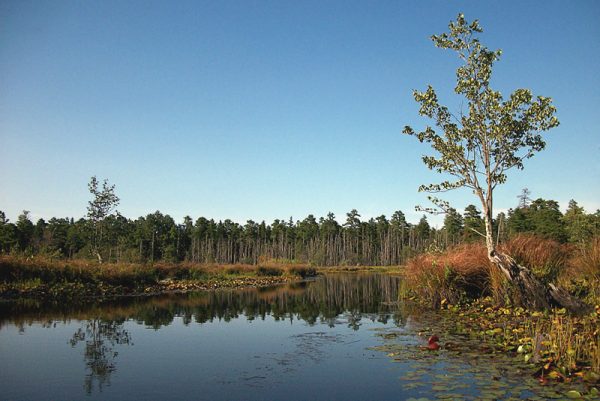
The New Jersey Pine Barrens are a national reserve in the United States, providing a protective home to over a dozen species and natural resources. Williamstown, New Jersey has already proposed to rezone areas of the Pine Barrens (the Black Horse Pike) for construction of new AI data centers. The usage of water on these already dry areas may deplete local water resources for nearby wildlife and streams. Concerned residents recently created a petition to prohibit new data centers in the Pine Barrens.
But the most notable concern is the carbon footprint. A recent study found that with the large energy demand, AI data centers could produce global carbon emissions that are equivalent to city-scale emissions. With multiple AI data centers in Piscataway that reach up to nearly 100,000 square feet, Piscataway already has a large carbon footprint.
In addition, large AI data centers can produce large amounts of noise pollution. South Jersey, Vineland has one of the biggest AI data centers, reaching 2.6 million square feet. Vineland has an incredibly dry climate, meaning that AI data centers struggle to reach the water requirements. However, most notably, residents have been noticing annoying, vibrating humming noises which have kept them up at night and have disrupted the local wildlife. With the development of new AI data centers in Piscataway, this could become a real possibility as well.
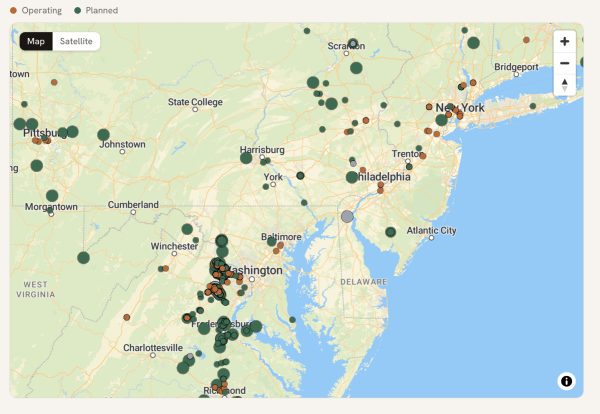
Piscataway is not the only victim to the AI center craze — it has occurred to its neighbors, Edison, South Brunswick, Woodbridge, and more. It is slowly making its way to North Jersey, which is currently in a drought warning due to the little rainfall it is currently getting, and South Jersey, which is known for its farmland. The so-called Garden State is substituting its farmland with AI data centers, and the consequences have been affecting residents as such.
Not an Easy Fix
The simple solution would be to fully halt the construction of AI data centers. But the answer is not black-and-white — in a constantly advancing society, AI data centers have represented a substantial stepping stone to the future. Ironically, AI data centers could target climate change by predicting the weather/climate and mapping deforestation. AI has already revolutionized lives by being used to help communities vulnerable to climate change in Africa and predicting 3D protein structures. AI is much more nuanced than the press and media reveal, and it should be treated as such.
Legislative efforts have been pushing for heavier regulation on construction of AI data centers. Middlesex’s district Senator, Bob Smith, has already pushed for bill S4143, which aims to lower energy and electricity demands by requiring all electricity for AI to be driven from clean energy sources.
It is unclear what the solution is to address the rapid growth of data centers and balance the potential benefit they have on socitey with the stress they place on the electrical grid and on the environment, but one thing is clear: residents have to be aware and informed about this issue, and press their legislators for ethical, responsible, and effective regulations to meet this need.