Should Piscataway High School Busses Go Electric?
Every day, approximately five hundred thousand school buses across the United States release harmful emissions caused by diesel-powered school buses. As climate concerns intensify and communities become more aware of air pollution’s impact on children’s health, state governments, including New Jersey, have questioned whether or not to convert diesel fueled school buses to electric ones. In New Jersey, out of the 21,700 school buses registered, over 99% run on fossil fuels, Piscataway included. While diesel buses have been reliable, it may be time to cut down and substitute in a new modern – electric buses.
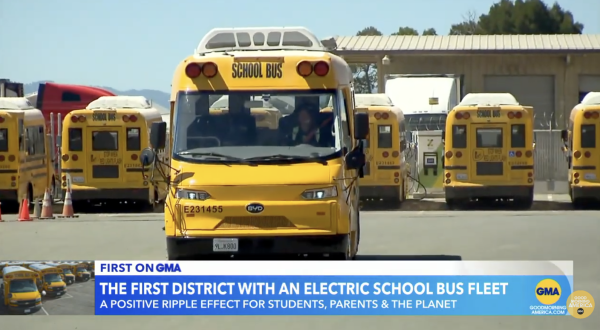
We would not be the first to make this change. The Oakland Unified School District in Oakland, CA was the first in the nation to debut an all-electric fleet of buses in 2024. Given new funding opportunities from state and federal programs, other districts have followed in similar steps to transition into an all-electric bus fleet.
New Jersey has begun to make changes too! In August 2025, Governor Murphy announced different initiatives to modernize transportation in South Jersey, i.e. convert diesel into electric buses. A $5 million investment was placed towards the expansion of transportation in South Jersey, also planning to expand a fleet of electric buses in Camden. Additionally, The Governor announced that NJ TRANSIT is committed to fully transitioning to electric vehicles by the year 2031. To completely transition into electric vehicles will require lots of funds and investments, as well as possible infrastructure changes for this to occur.
Despite the drastic changes needed, many support the idea of electrifying current bus fleets. A poll conducted by Highland Electric fleets reveal that 65% of parents would prefer electric buses over diesel, and 89% of parents were convinced that electric buses would improve children’s air quality. Another poll led by Highland Electric fleets also revealed that 60% of parents and other voters are concerned that their students physical and mental health – as well as academic readiness – may be affected by diesel emissions. These parents’ concerns point to the relationship between environmental problems and health problems: many studies link diesel emissions to respiratory problems among other health concerns. Pollution is harmful to the environment and to humans.
Transportation remains one of the largest contributors to greenhouse gas emissions. Diesel buses are used everywhere – not only for school buses. Even when diesel buses are stationary, diesel engines release exhaust whenever they’re running. These particles released from diesel exhaust consist of an inert, carbonaceous core with a large surface area ideal for absorbing heavy metals and organic compounds. Children, who are still developing, are the most vulnerable to these pollutants. These particles penetrate through the children’s lungs causing respiratory illnesses such as asthma, lung disease, etc. Because school buses are idle frequently at children’s schools, areas with children have the most concentrated area of diesel pollutants.
Beyond direct health concerns, diesel exhaust has been linked to a decline in cognitive ability. A recent study exposed participants to concentrations of diesel exhaust. These participants, most of whom were adults in their late 20s, were exposed to concentrations of diesel exhaust for two hours, which was equivalent to the emissions breathed in while waiting in traffic. Participants performed cognitive tests before and after diesel exposure on different days. The results show that reaction time was significantly impacted, taking longer times (around an additional ~20 milliseconds) to respond to stimulus. While this experiment exposed these fully developed adults for extended periods of time, imagine the impact such exposure would have on children’s health. Kids who are still developing and take the bus everyday (where those fumes might accumulate), are exposed over time consistently to these pollutants, potentially weakening their physical and cognitive health.
Although moving to electric busses would be costly, thanks to the New Jersey Department of Environmental Protection (NJDEP), the department has made it easier to convert from diesel to electric buses. The department runs an Electric School Bus Program, where school districts that own/lease their buses are able to apply for grants to convert from diesel to electric buses. The program gives approximately $300,000 to invest in these buses. Piscataway High School uses approximately ~30 buses to travel high school students in the morning and after school. These buses frequently idle and release diesel exhaust. Especially because most Piscataway students like to eat outside, many students inhale this diesel exhaust regularly. With a new electric fleet, Piscataway would be able to provide their high school students a healthier and more sustainable environment. Lunch outside could be a lot healthier.
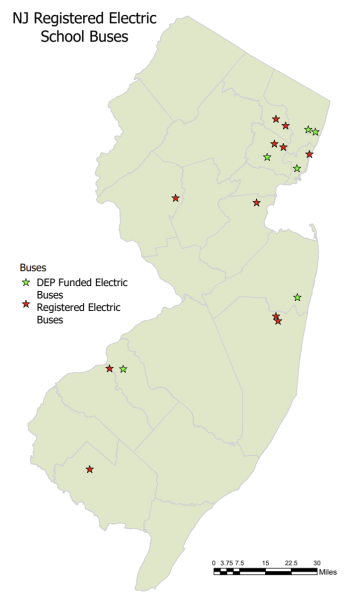
Piscataway schools are able to apply for a grant to use electric buses. We would need to fill out an application for approval for a new fleet of electric buses when the rounds to apply are open. Although the most recent opportunity passed in September, there are several more opportunities throughout the year. To have a cleaner and healthier environment, Piscataway must begin to transition to more greener and sustainable practices. Receiving the $300,000 grant would help to begin to cover the costs for electric busses for Pway. The benefits are obvious, and it is easy to apply — the question isn’t if Piscataway should apply, but why haven’t we already?
I encourage students, parents, and community members who are concerned about diesel fueled buses to share their opinions with the Piscataway Board of Education to support the transition of converting to electric buses.
In addition, students can also take part in building a greener community through downloading the Climate Action Now app. The app provides daily actions that demand minimal time to be completed everyday, such as contacting your legislators and signing petitions about climate issues. Each action takes only a few minutes but contributes to a collective movement for a healthier and more sustainable planet. Regardless of your political views, protecting the environment is a shared responsibility. For a cleaner future, we have to start taking actions now, one bus at a time!