A war thousands of miles to the east surges as President Trump continues to wage war against Iran, which is not only causing trouble in the Middle East, but is causing disruption in normal American civilian lives as gas prices rise due to Iran’s strategic decision to cut off access to the Strait of Hormuz, which runs 20% of the wotrld’s oil supply. As gas prices surge due to the war in the Middle East, civilian lives change and adapt to these rising gas prices, specifically the student drivers of PHS
A history of rising gas prices
In history, inflation has affected many things and utilities in the US, that includes gas prices which are important for everyday use and transportation. But several other things can affect gas prices, that includes wars. Wars such as the Iraqi War of 2003 or the Yom Kippur War where it served a catalyst for the 1970 energy crisis where politics and conflicts cut off proper oil trade which raised gas prices. Before major inflation, gas prices were between a few cents to $2. During the 1970 Energy Crisis, gas prices doubled from 0.38 to 0.84 dollars a gallon which did create a situation for drivers. During the 1970 energy crisis, US drivers did not take this well and panicked or even resorted to violence. People waited in line for hours for gas, people used guns or siphoned cars for gas, and truckers even blocked interstate highways to protest these gas prices, and even jets started to switch from huge and fuel hungry quad-jets and tri-jets to the new future of twin-jet airliners like the Airbus A300 which was popular during the time of the crisis.
Gas Prices in the US and how it affects our drivers
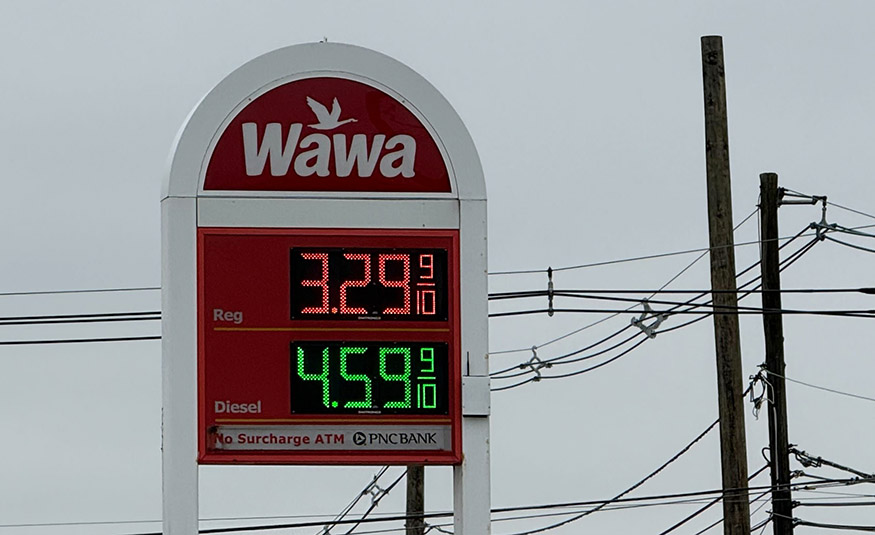
Due to the current 2026 Iran War and Operation Epic Fury, President Trump’s actions have made gas prices in the US significantly worse, leading this to be named the worst crisis since the 1970 energy crisis. Gas prices, specifically in Middlesex, NJ, rose to between $3.86 and $4.00 per gallon. As of right now, people in NJ are starting to drive less, and they only partially fill up their gas tanks by paying $10–$20 to manage their money. People are also starting to cut back on miscellaneous activities such as dining out, shopping, and entertainment. More importantly, they are driving older or modern efficient vehicles, EVs, and hybrids with higher MPG, which still does not help this crisis. Student drivers at PHS are very much affected by this war; some only do partial fill-ups, saying gas prices “are crazy for me.” Other students only use a set amount like $50, with one student noting that “it used to give me nearly a full tank, now only ¾ of a tank,” which results in a significant range difference of around 100 miles. Furthermore, some students at PHS dislike this war because they believe it is morally bad, with one student stating, “We’re paying the price for war, we shouldn’t.”
As of right now, President Trump only seems to be escalating the war. Major events are being produced by this war, such as a report of a Kuwaiti Oil tanker hit by a drone attack, US crude oil prices coming at 100$ a barrel, and President Trump threatening to target Iran’s energy hubs and power sources, and much more. This war is indeed the worst energy affecting war since the 1970 energy crisis, as people continue to live, suffer, and adapt with these outraging gas prices, especially student drivers at Piscataway High School who drive regularly. This war does look like this will go on for longer, such as these gas prices too which has majorly affected our students at PHS.